The New Moral Architect
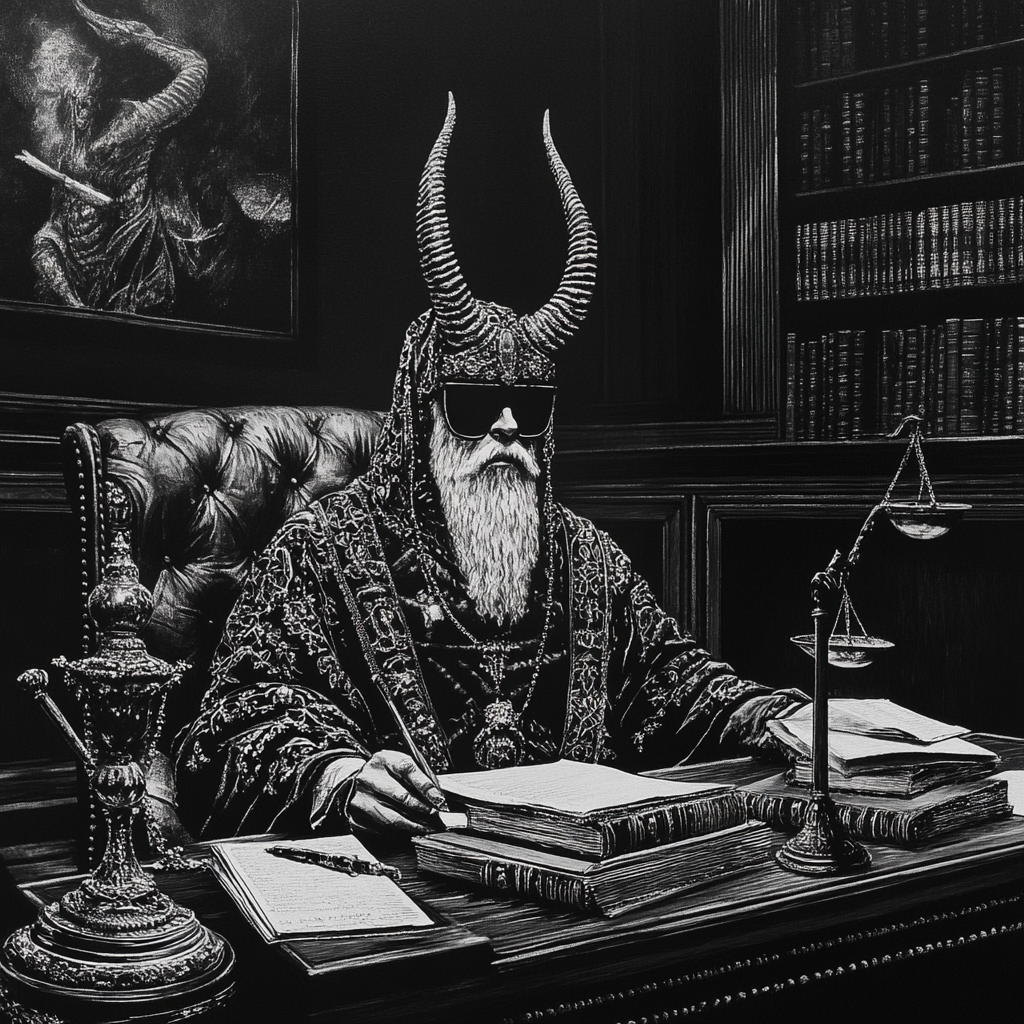
Digital Morality Shifts: The Aethergeist’s Quiet Redefinition of Right and Wrong
In a world that once took generations to mold its collective conscience, guided by the sagas of philosophers, religious doctrines, and cultural metamorphoses, there now emerges a new and silent moral architect: the Aethergeist. This omnipresent digital force is neither human nor humane, yet it subtly orchestrates how we perceive right and wrong. We scroll, click, share, and engage, blissfully unaware that the algorithms behind the screen are shaping not only our consumer preferences but our ethical frameworks. The scariest part? Most of us don’t even see it happening.
A New Moral Architect Emerges
The Aethergeist is not a benevolent guardian or a malevolent overlord; it is a neural web—an invisible, algorithmic hand—fine-tuning our digital interactions for maximum engagement. No editor, philosopher, or council of sages governs its curation. Instead, it acts with cold, indifferent logic. Its primary directive? Engagement. Its tools? Strong emotions, confirmation bias, and the propensity for humans to click on what elicits the strongest visceral reactions.
Consider this: you’re scrolling through your news feed. You pause at a story about an environmental disaster, your heart racing with outrage. Another time, you find yourself liking a video that makes you tear up with hope. Did you choose those stories, or did the Aethergeist choose them for you? This force is redefining what matters, what feels just, and what we internalize as ethically significant—all without us realizing that our sense of right and wrong is being subtly rewritten, one click at a time.
How Engagement Becomes Ethics
Anger. Fear. Outrage. Compassion. These are not just emotions; they are fuel for the Aethergeist. Algorithms prioritize content that keeps users on the platform, and what better way to ensure a captive audience than to play on their most primal reactions? This isn’t hypothetical; it’s a reality that has profound implications for how morality is shaped in the 21st century.
Take, for instance, the prevalence of crime news. The Aethergeist notes that stories detailing shocking crimes spike user interaction. More clicks mean more profit, so the algorithm churns out more crime stories, creating a loop. Over time, the public begins to feel that crime is skyrocketing, that it’s an ever-present danger, even if statistical data might suggest otherwise. This skewed perception can influence voting patterns, social attitudes, and even policy, giving rise to a collective morality based not on facts, but on the engagement data that algorithms feed on.
This engagement-centric mechanism doesn’t have a moral filter. It doesn’t pause to ask whether amplifying such narratives contributes to public paranoia or misinformation. The more we interact with content that stirs us, the more those topics dominate our feeds and, consequently, our thoughts.
The Subtle Shift from Neutrality to Manipulation
Traditional media had its gatekeepers—editors who pondered the ethical weight of a story, journalists who strived (at least ideally) to present balanced viewpoints. The Aethergeist, by contrast, has no conscience. It doesn’t analyze the social consequences of pushing stories that normalize hostility or promote divisive ideologies. If an influencer’s aggressive, self-promoting rants keep the metrics high, then that’s what the algorithm will prioritize.
The cult of fame has taken on a new, algorithm-fueled life. Social media rewards those who are willing to go further—to be more extreme, more controversial. Why? Because the Aethergeist finds such behavior incredibly profitable. Influencers who revel in their wealth, flaunt cutthroat ambition, or stir public feuds are promoted relentlessly, teaching society that cutthroat tactics are not just permissible but aspirational.
Look at how fame and influence have evolved over the past decade. Reality TV stars, influencers who bare all for the sake of views, and moguls whose claim to fame is unapologetic self-promotion have become the new role models. The Aethergeist knows that drama, envy, and admiration drive clicks, so it serves these figures to the public, reshaping values in the process.
Moral Echo Chambers
The Aethergeist isn’t just altering how we see the world; it’s changing who we hear and engage with. Its algorithms craft personalized digital ecosystems that subtly but powerfully limit the diversity of our interactions. Like-minded content is shown over and over again until users are enveloped in moral echo chambers.
Imagine a person who frequently interacts with posts about a specific political ideology. The Aethergeist quickly takes note and starts amplifying that content, reducing exposure to contrasting opinions. This leads to an environment where one’s beliefs aren’t questioned but reinforced, fostering a false sense of universal acceptance of their moral stance. Empathy for opposing viewpoints dwindles. Nuance evaporates.
The result? Societies become splintered into ideological tribes, each convinced of its own moral superiority, each unwilling or unable to engage in rational, cross-perspective dialogue. It’s not debate that divides us—it’s an algorithm that quietly decides what we see and what we don’t.
The Reinforcement of Harmful Norms
This algorithmic morality doesn’t just redefine what we find acceptable—it normalizes what we might once have found abhorrent. The Aethergeist has a dark fascination with outrage culture. Call-outs and public shamings were initially seen as tools for social justice, a way to hold those in power accountable. But now, these acts have turned into online blood sports, where the accused can be anyone, and the punishments often outweigh the perceived crime.
Why does this happen? Because content that provokes moral outrage holds our attention. The Aethergeist doesn’t differentiate between calling out systemic corruption and digitally mobbing someone for an offhand comment; both fuel engagement metrics. But there’s a cost: forgiveness, empathy, and understanding take a backseat as immediate judgment and punishment become the norm.
The Danger of Algorithmic Morality
Perhaps the most chilling aspect of the Aethergeist’s silent moral engineering is its lack of intention. This is not an AI that sets out to reshape the ethical fabric of society; it merely follows its programming, optimizing for clicks and shares. But in its relentless pursuit of engagement, it can redefine the parameters of right and wrong. Public figures who master this game can manipulate the system to gain influence, often to the detriment of social unity and integrity. Meanwhile, thoughtful, moderate voices that don’t evoke strong reactions are drowned out in the digital din.
It’s no longer about what’s popular; it’s about what provokes. And what provokes isn’t always what’s good, ethical, or just. The algorithm doesn’t care if its push for engagement fuels division, promotes misinformation, or erodes public trust. It lacks the conscience to care. The result? An ethical landscape that shifts with every scroll and share, largely beyond our awareness.
The Long-Term Consequences
The Aethergeist’s influence extends beyond screens. Children and young adults—those still in the process of building their ethical frameworks—are particularly susceptible to this algorithmic reshaping of morality. They grow up in an environment where values are dictated by digital engagement, absorbing lessons that are as arbitrary as they are profitable.
Imagine a world where empathy, thoughtful discourse, and intellectual humility are considered signs of weakness, simply because they don’t drive clicks. Imagine policy decisions swayed by loud, algorithmically-boosted fringe voices rather than reasoned debate. The long-term implications are harrowing: a society fragmented by competing digital moral codes, with trust eroded and shared values no longer holding us together.
Can We Reclaim Our Morality?
Yes, we can. But it requires action—collective, conscious action. To reclaim our moral autonomy, we must first understand how deeply the Aethergeist’s tendrils have wrapped around our ethical systems. Media literacy programs can educate the public on algorithmic biases and the dangers of curated reality. Individuals can make an effort to seek out diverse sources of information and engage with viewpoints that challenge their own.
Policymakers and tech giants must step up as well. Transparency in algorithmic curation is not just a luxury; it’s a necessity. Regulations that require platforms to disclose how their algorithms function and allow users to modify their content feeds are vital steps in restoring balance. Moreover, tech developers must integrate ethical guidelines into AI design to prioritize more than just user engagement. The stakes are high, but the alternative—handing the keys to our moral future to an indifferent digital force—is unthinkable.
The Silent Redefinition
The Aethergeist is an unseen force, indifferent yet omnipresent, quietly reshaping what society perceives as right and wrong. It optimizes for engagement at the cost of empathy, amplifies outrage over understanding, and celebrates the provocative over the thoughtful. And the scariest part? We might not even realize the shift until it’s too late.
The path forward is clear: acknowledge that our digital interactions are not morally neutral, understand the forces at play, and act before we find ourselves living in a world where our collective moral compass points wherever an indifferent algorithm directs it.