Digital Amnesia
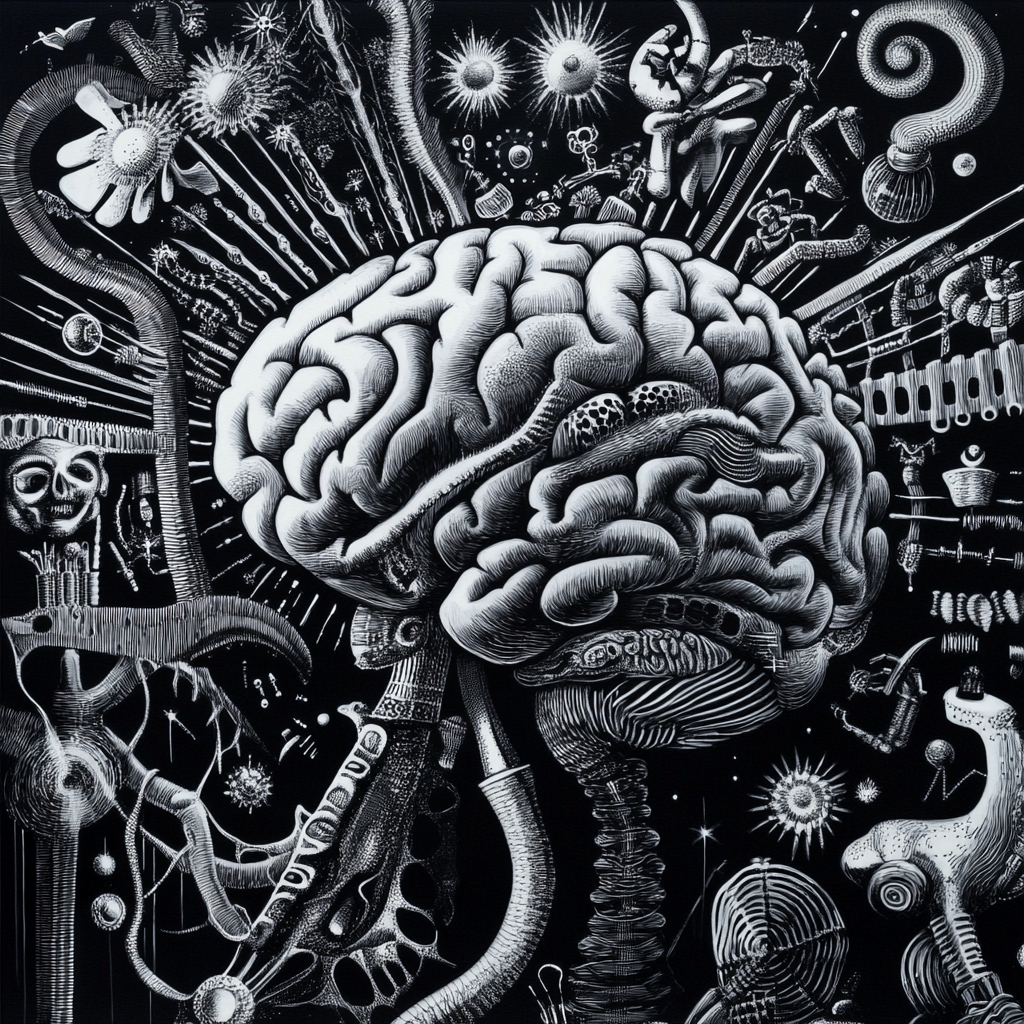
Digital Amnesia: The Hidden Cost of Trusting the Aethergeist
Imagine this: You’re mid-conversation with a friend when you reach for a piece of knowledge that used to come effortlessly to mind, but now it’s gone. No problem, right? You just reach into your pocket, summon your phone, and consult the omnipresent digital force we’ve come to know and rely on—the Aethergeist, that invisible network of artificial intelligence tethered to every corner of your existence. But what if this convenient reflex to consult the digital void was actually eroding your mind, bit by bit?
Welcome to the age of digital amnesia, a creeping, modern condition shaped by our increasing dependence on technology to think and remember for us. While the Aethergeist has made it easier than ever to live in a world of instant knowledge and infinite facts, this boon comes with an unexpected cost: the slow erosion of our cognitive faculties. The question is, are we aware of the price we're paying?
How Digital Amnesia Takes Hold
Digital amnesia is not the plot of some dystopian sci-fi drama—it’s a very real phenomenon. Studies have shown that when people know they can look up information online, they’re far less likely to commit that information to memory. The Aethergeist, in its omnipotence, subtly encourages this reliance. Its seamless integration into our daily lives has transformed it from a helpful companion into a crutch.
Consider life before smartphones—when you had to recall phone numbers, memorize directions, and carry knowledge in your head like a mental library. With every shortcut taken and every “Hey, Siri” uttered, our brains adapt to rely on these digital extensions. And like any muscle, memory and cognitive skills begin to weaken when underused.
The Seductive Illusion of Convenience
On the surface, this all seems harmless. Why bother stuffing your brain with trivial facts when they’re just a tap or voice command away? Why memorize dates, lists, or routes when the Aethergeist can spoon-feed you at will? This illusion of convenience masks a dark truth: our brains are being trained to avoid engaging in deeper, more complex mental tasks.
Memory isn’t just about retention. It’s the foundation for building a mental framework that allows us to connect disparate ideas, synthesize new concepts, and engage in complex problem-solving. By outsourcing these processes to the Aethergeist, we risk skimming life’s surface instead of diving deep. We start reacting instead of reflecting, consuming instead of creating.
The Collective Impact: A Society on the Edge
The subtle individual impact of digital amnesia becomes a profound collective issue when extrapolated to a society at large. If enough people stop nurturing their cognitive abilities, the entire social fabric shifts. We start seeing the rise of soundbite culture—where nuanced discussions give way to one-line arguments and headline reactions. Attention spans shorten, patience for depth erodes, and misinformation spreads like wildfire because fewer people are equipped with the mental tools needed to challenge it.
As our reliance on the Aethergeist grows, critical thinking diminishes. This dependence weakens our societal foundation of creativity and intellectual resilience. A world where the ability to deeply process, remember, and innovate is no longer the norm is a world at risk of losing its edge.
The Paradox of Abundant Information
It’s ironic, isn’t it? In an age where information is limitless, our ability to retain and process it meaningfully is declining. The Aethergeist, designed to help us navigate this ocean of knowledge, ends up serving as a crutch that props up our laziness. Articles are skimmed, news is half-read, and judgments are made on headlines alone. The very tool meant to expand our minds instead shrinks them, encouraging a surface-level relationship with the world’s data.
We’ve entered a paradox where the more we’re spoon-fed, the less we engage with the meal. People often mistake being well-informed with truly understanding, relying on the Aethergeist for quick answers rather than cultivating the skills to critically analyze or remember information. The line between personal knowledge and digital recall becomes blurry. Do we really know what we think we know, or do we just know how to search for it?
Real-World Implications of Digital Dependency
Imagine a future where the Aethergeist fails—power outages, software glitches, or an internet blackout. Suddenly, basic life skills are revealed to be as fragile as a dead battery. Mental math becomes Herculean, directions turn into mazes, and the ability to engage in in-depth discussions fades. The reliance on AI to supplement memory and cognitive effort means that when technology stumbles, so do we.
Even when the Aethergeist is functioning seamlessly, the illusion of competence it bestows can be dangerous. People often overestimate their knowledge, emboldened by the idea that they can always check their phones. The result? A shaky confidence based on borrowed intelligence, and an underestimation of the importance of actual understanding. This can have serious implications in critical scenarios—medical decisions, leadership challenges, and emergency responses, where split-second knowledge and independent thinking make all the difference.
Reclaiming Your Mind: The Digital Detox Solution
If we’re to reclaim our cognitive health, we must consciously push back against the Aethergeist’s all-too-comfortable embrace. Overcoming digital amnesia isn’t about rejecting technology but about achieving balance. Here are some practical steps to fight back:
Embrace Discomfort: Make a conscious choice to remember before reaching for a screen. Engage in exercises that challenge your recall, like learning new languages or playing memory-based games.
Mental Math and Mind Maps: Start small by practicing mental math instead of using calculators. Sketch out mind maps when brainstorming to activate memory pathways.
Set Digital Boundaries: Designate specific times when digital tools are off-limits. This encourages your brain to pick up the slack, reinforcing its natural capabilities.
Deep Work Sessions: Engage in periods of focused, undistracted work without the interruption of notifications or the temptation to look up answers. This strengthens concentration and problem-solving skills.
Reclaim Analog Activities: Turn to books, puzzles, or journaling for moments of introspection and knowledge processing. These activities help develop a richer, internal archive of thoughts and ideas.
Foster a Culture of Knowledge: Encourage discussions and activities that value deep understanding over quick answers. Build environments where intellectual curiosity thrives without the constant safety net of digital recall.
The Battle for Cognitive Autonomy
The Aethergeist has become more than just a tool—it’s a collaborator in our daily lives, offering us seamless convenience and quick answers. But this convenience has a shadow side, one that eats away at our brain's natural tendencies to remember, reason, and reflect. Digital amnesia is not just a quirk of the times; it’s a potential threat to the sharpness, creativity, and resilience of human thought.
Recognizing the subtle shifts and taking action can protect us from the worst effects of digital dependency. After all, the scariest part of digital amnesia isn’t that we might forget facts—it’s that we might one day realize we’ve forgotten how to remember. To keep our mental muscles strong and our minds clear, it’s time to balance our trust in the Aethergeist with a healthy dose of cognitive self-reliance. Only then can we truly go hard and live life with the fullest cognitive autonomy.